


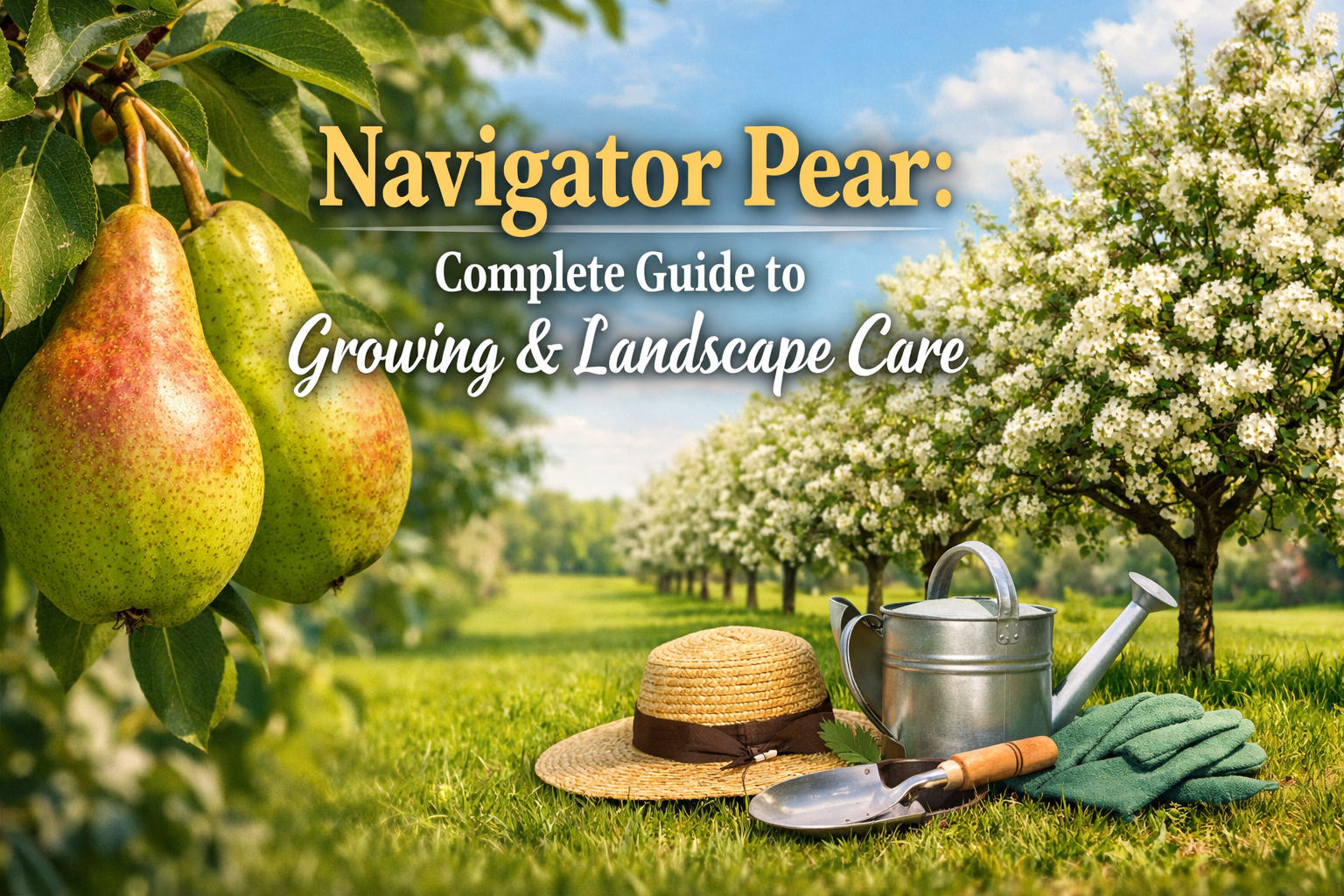
If you’re planning a yard update or looking for a tree that actually earns its space across all four seasons, the navigator pear deserves a close look. It’s not the most talked-about tree at the nursery, but experienced gardeners often reach for it first — and for good reason.
This guide covers everything: what this tree is, how it grows, what it needs, and why it outperforms many popular ornamental choices.
What Is the Navigator Pear?
The navigator pear (Pyrus ‘Navigator’) is a deciduous ornamental tree selected for its visual appeal, seasonal performance, and tough-weather resilience — not for edible fruit. While it does produce small pears, they’re hard and bitter, making cultivation here purely aesthetic.
What sets it apart is its ability to thrive where other ornamental trees struggle. Cold winters, poor soil, urban pollution — this tree handles conditions that would stress less hardy varieties.
Origins and Development
This cultivar came out of targeted breeding programs focused on cold-hardy landscape trees. Programs similar to those run through the University of Minnesota’s horticulture department have long pursued trees that combine northern climate resilience with ornamental value.
The result is a tree with a strong central leader, well-spaced branches, and a naturally upright form that rarely needs corrective pruning. That structural discipline was built in — it wasn’t accidental.
Botanical Features
The navigator pear grows to around 20 feet, with a clean pyramidal silhouette. Its glossy dark green leaves shift to deep reds and oranges in fall before dropping cleanly. Spring brings clusters of white flowers that attract bees and other pollinators. The medium-sized fruit that follows ripens to a golden yellow but stays small and inedible throughout.
Key Features of the Navigator Pear
Few ornamental trees deliver visual interest in every season. This one does.
Spring Blossoms
In mid-spring, dense clusters of white flowers cover the tree before the leaves fully emerge. The display is brief but striking — and it serves a practical purpose. The nectar draws early-season pollinators, supporting the broader garden ecosystem at a time when few other trees are flowering.
Summer Foliage
Once the blossoms fade, the ovate leaves take over. They have a slightly serrated margin and a waxy coating that naturally resists many foliar diseases. The canopy fills in well, offering reliable shade without becoming unruly. The glossy surface keeps the foliage looking clean even in humid conditions.
Autumn Color
Fall is arguably the best season for this tree. The glossy green leaves shift through yellow, orange, and reddish-purple — sometimes all on the same tree at once. Unlike some ornamentals that peak for a week, the navigator pear holds its fall color for an extended period, making it a reliable specimen in any autumn landscape.
Winter Structure
After leaf drop, the pyramidal form and textured dark bark remain. At a mature height of 25–30 feet with a spread of 15–20 feet, the tree maintains visual weight even in a bare winter yard. That structure is what separates it from ornamentals that disappear the moment foliage drops.
Growing Conditions for Navigator Pear
| Condition | Ideal Range |
| Soil type | Well-drained loamy soil; tolerates clay and sandy soils |
| Soil pH | Slightly acidic to neutral — 6.0 to 7.0 |
| Sunlight | Full sun preferred; tolerates partial shade |
| Spacing | Minimum 15 feet from structures and power lines |
| Hardiness | USDA Zones 3–4 and above |
This tree adapts well to urban environments. It handles streetscape conditions, compacted soils, and air pollution better than most ornamental species. The key non-negotiable is drainage — waterlogged soil is the one condition that consistently causes problems.
In practice, trees planted in heavy clay with poor drainage often show stress within the first two seasons, even when everything else is done right.
Planting Your Navigator Pear Tree
Getting the planting right is more important than any care step that follows. A poorly planted tree rarely recovers fully.
- Dig wide, not deep. The hole should be two to three times the width of the root ball but no deeper than the ball itself. Wide holes encourage lateral root spread.
- Don’t amend the backfill. Filling the hole with enriched soil creates a comfort zone that discourages roots from moving into native ground. Use the original soil.
- Set the root ball correctly. The top of the root ball should sit level with or slightly above the surrounding grade — never below it.
- If planting from burlap, set the entire root ball in the hole before cutting the twine from around the trunk. Remove burlap from the top half once the tree is positioned.
- Mulch after planting. A 2–3 inch layer of organic mulch around the base retains moisture and moderates soil temperature. Keep it a few inches clear of the trunk itself.
Water deeply immediately after planting. For the first growing season, aim for once-weekly deep watering rather than frequent shallow watering.
Navigator Pear Care and Maintenance
Watering
Once established, this tree is notably drought-tolerant. In most cases, natural rainfall handles routine needs. During extended dry spells or prolonged heat, deep watering every 10–14 days prevents stress without creating overwatering risk. Root rot typically happens when water sits around the base — not from occasional dryness.
Fertilizing
Heavy fertilization isn’t necessary. If the soil is genuinely poor, a balanced slow-release fertilizer applied in early spring gives the tree what it needs without pushing excessive growth. The Arbor Day Foundation recommends soil testing before fertilizing — and that guidance holds here. Feeding a tree that doesn’t need it can do more harm than help.
Pruning
The navigator pear’s natural structure does most of the work. Pruning needs are minimal. The best window is late winter or early spring while the tree is still dormant. Focus on:
- Dead or damaged branches
- Crossing branches that create friction or block airflow
- Any growth that disrupts the central leader
Avoid heavy pruning in summer or fall — it stimulates late growth that won’t harden before winter.
Pests, Diseases, and Other Challenges
The navigator pear was developed with disease resistance built in, but “resistant” doesn’t mean immune.
Fire blight is the most common concern. This bacterial disease causes branches to look scorched and blackened. If it appears, prune affected wood immediately, cutting at least 12 inches back into healthy wood. Sterilize pruning tools between cuts to avoid spreading it further.
Aphids show up occasionally, especially in spring. In most cases, natural predators like ladybugs handle the population before it becomes serious. If intervention is needed, insecticidal soap is effective and low-impact.
Pear psylla is less common but worth knowing. It causes leaf yellowing and can weaken young trees. Organic solutions work well when applied early.
A common issue with ornamental pears generally is weak branch attachment — particularly in older varieties. The navigator pear was specifically bred with a stronger branching structure to address this, which is one reason it performs better in storm conditions than many competing cultivars.
Landscape Uses of Navigator Pear
The tree’s moderate size makes it genuinely versatile. At full maturity, it fits medium and larger yards without overwhelming the space. Its uses include:
- Focal point planting — the four-season interest makes it a natural anchor for any garden design
- Pathway lining — the upright form works well planted in rows along driveways or walkways
- Privacy screening — planted at intervals, the dense canopy creates effective visual separation
- Urban settings — tolerates pollution and compacted soil, making it suitable for parks and streetscapes
White blossoms in spring and vibrant fall foliage also draw birds and contribute to local biodiversity. In smaller gardens, one well-placed tree delivers more seasonal impact than several high-maintenance alternatives.
Why the Navigator Pear Is a Valuable Landscape Tree
Most ornamental trees offer one strong season. This one offers four. That year-round performance — spring flowers, summer canopy, fall color, winter structure — is what drives its increasing presence in residential and commercial landscape design.
Its adaptability removes many of the usual constraints. Poor soil, cold winters, urban conditions — each of these eliminates candidates from a landscape shortlist. The navigator pear stays on it. For homeowners and landscapers looking for low-maintenance coverage without sacrificing aesthetic value, it consistently earns its placement.
Conclusion
The navigator pear is a practical, high-performing ornamental tree that delivers real landscape value without demanding excessive care. Its spring blossoms, summer shade, fall color, and winter structure give it relevance in every season. Disease resistance, cold hardiness, and soil adaptability make it a reliable long-term investment for any yard.
If you’re looking for one tree that earns its space year-round and requires minimal intervention, this is a strong choice.
FAQs
Can you eat the fruit from a navigator pear?
No. The fruit is small, hard, and bitter. This tree is bred for ornamental qualities, not fruit production.
How fast does a navigator pear tree grow?
Expect around 1–2 feet per year once established. Growth stabilizes as the tree matures.
How cold-hardy is the navigator pear?
It’s rated for USDA Hardiness Zones 3–4, making it well-suited for regions with harsh, cold winters.
Is the navigator pear tree messy?
Minimal cleanup. Small ornamental fruits drop in fall, but they’re far less disruptive than fruit from larger fruiting trees.
Does the navigator pear have thorns?
No. It’s a thornless variety, which makes it safe around children and pets in residential areas.
